
Write What You Know
citizen journalism or world fiction?

In this age of citizen journalism, we all have the right (and duty, in times of universal oppression such as the state of Covidia) to express our opinions on matters of the day. When barraged with suspect facts and weaponized narratives, cowed by faux experts, and steered toward genocidal consensus, what alternative is there but to paint a worldview colored by our intuitive sense of truth and justice? It feels necessary to push back against politicized illusions before we can reimagine a reality we prefer to inhabit.
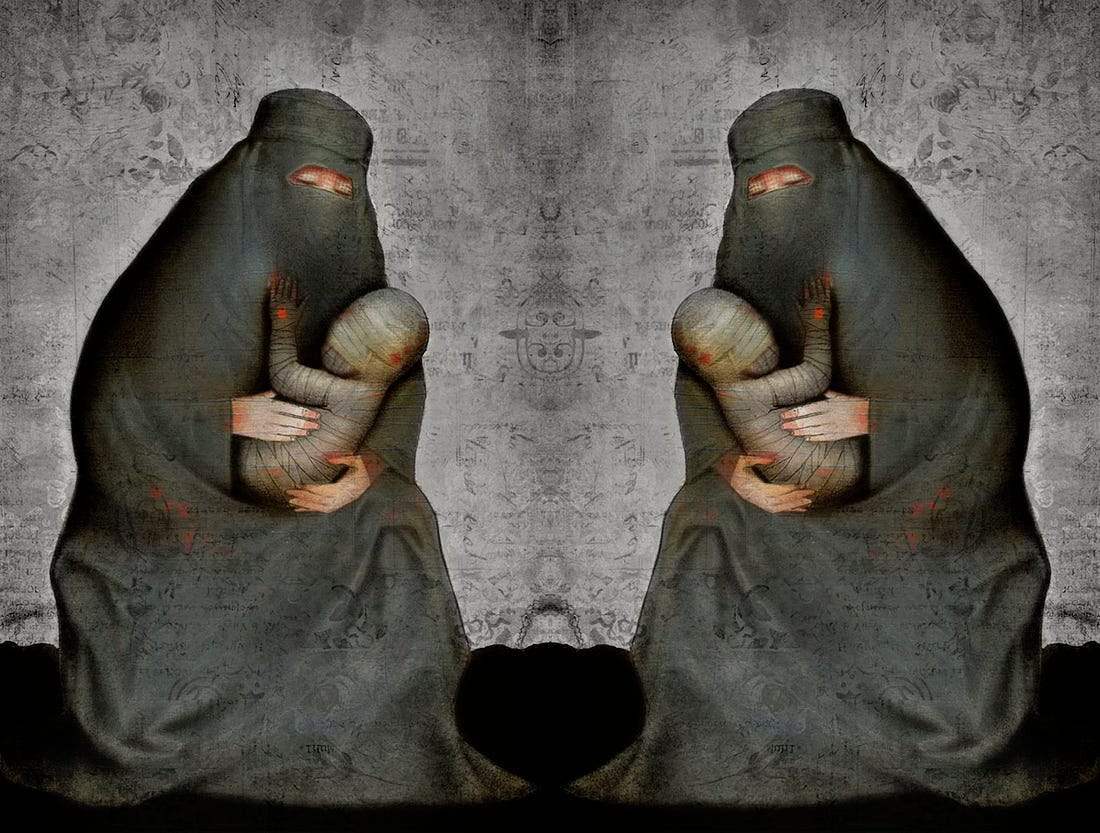
Yet, there is a danger in being sucked into the vortex of the news cycle. Post-Covid, the themes of importance have multiplied to include financial fraud, immigration agendas, gender wars, and the hyperhoax of net zero carbon emissions, among others. Against multilayered manipulation of the mediascape through co-opted personalities and onionskin agendas, we try to unpack Russian dolls and Chinese boxes to get to the bottom of things, the root causes, the ultimate conspirators.
We train our eyes on the lineup of suspects to discern the perpetrators of crimes against humanity. We meditate on the nature of evil, inquiring of the machine itself whether it’s a bug or a feature, a cosmic error or intrinsic to the code of the simulation. We seek solace in a shrinking footprint of nature, seemingly exiled along with it on the very planet it created.

What do we know? We only live here.
If we were honest journalists, we would vet all our sources and report what we witness firsthand. Writers of nonfiction, we would strive for accurate description, cover all the bases of who what where when and to whatever extent possible, why. We would present the facts as we understand them and let the reader decide if they jive with our impression, our implied conclusion.
So where does that leave us now? Gazing out the window in this sleepy Mexican town, amid birdcalls and children’s voices, women chatting, vehicles beeping.
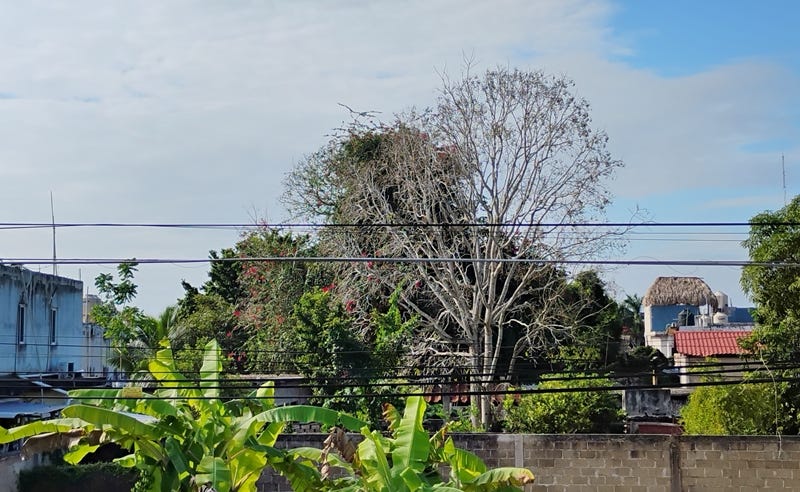
A writer’s private life, of meals and swims and music lessons, politically incorrect. A vacation idyll approximate to global hotspots (Venezuela, Cuba), watching coincidental thrillers (Greenland and Greenland 2) of impending apocalypse. Browsing news of the day from my fellow citizen journalists, each with their own opinion of Trump, Putin, Carney, Xi, the heroes and antagonists of this larger-than-life story line.
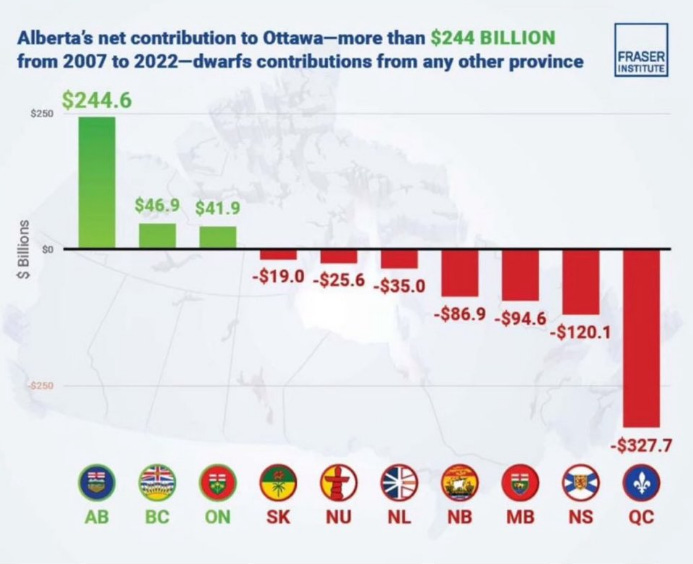
Maybe we’re not all journalists after all, but characters in the Great American Novel, written for all the world to enjoy—or not, discarded in favor of some other fiction, some steamier fantasy.
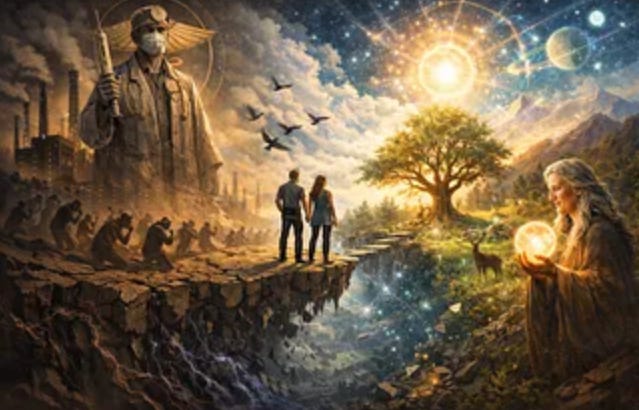
I would like to see free land to grow food of the best quality for the local villagers...then we go do trade and share with other village/townsites...with what they were able to and grow the best of. It's easy to grow apples but, mono cultures are not known to be 'safe and secure' crop to rely upon. Grow a variety...like having a variety of styling clothes to choose from.
if i want to know what's going on locally, one of the best sources is the car mechanic because he talks with a lot of local people. And that reminds of a scene where Sherlock Holmes tells Watson that one of the best ways to find out stuff is to go to the local pub, have a brew and chat with the bartender because he knows everyone in town and can give character assessments.